Rediscover Your Creativity at Paint and Draw!

  • ABOUT
  • GALLERY
  • TESTIMONIALS
  • BLOG
  • Available Courses
  • HIRE AN ART TEACHER
  • ABOUT
  • GALLERY
  • TESTIMONIALS
  • BLOG
  • Available Courses
  • HIRE AN ART TEACHER

The Artist's Eye: Why Painters, Sculptors, and Creators See the World Like Nobody Else

8/16/2025

0 Comments

 
Have you ever wondered why your artist friend can spend twenty minutes staring at a brick wall and find it "absolutely fascinating"? Or why they insist that shadow isn't black but actually a complex symphony of purples, blues, and browns? Welcome to the wonderfully weird world of artistic perception, where normal people see a tree and artists see a masterpiece waiting to happen.
The Brain That Thinks in Pictures
Let's start with some mind-bending science. Psychologists have discovered that artists' brains are literally wired differently. When most of us look at a face, our brains immediately jump to recognition mode: "That's Sarah from accounting!" But artists? Their brains take a scenic route through the visual cortex, lingering on the play of light across a cheekbone or the subtle asymmetry that makes a smile genuinely human.
Dr. Rebecca Chamberlain's research at University College London found that art students showed increased neural matter in areas related to fine motor skills and visual imagery. In other words, years of training to really see actually reshapes the brain. It's like having a superpower, except instead of stopping bullets, you can spot the exact moment when afternoon light turns golden.
The Great Perspective Revolution
To understand how differently artists see, let's time-travel to Renaissance Italy. Before the 15th century, paintings looked charmingly flat – like medieval GPS directions drawn by someone who'd never left their village. Then along came Brunelleschi, Alberti, and their gang of mathematical rebels who figured out linear perspective.
Suddenly, artists weren't just painting what they knew was there; they were painting what the eye actually sees. This wasn't just a technical breakthrough – it was a complete rewiring of how humans thought about vision itself. Painters became the first scientists of sight, mapping the geometry of perception centuries before psychologists caught up.
Leonardo da Vinci, that ultimate Renaissance multitasker, filled thousands of pages with observations about how we see. He noticed that distant mountains appear blue (atmospheric perspective), that shadows have their own colors, and that the human eye doesn't focus on everything at once. While everyone else was content to see a landscape, Leonardo was deconstructing the very mechanics of seeing.
The Impressionist Eye Exam
Fast-forward to 19th-century France, where a group of artists decided to paint what they actually saw rather than what they thought they should see. The Impressionists were basically conducting the world's most colourful psychology experiment, exploring how light, colour, and time affect perception.
As Monet himself put it.  "Merely think, Here is a little square of blue, here an oblong of pink, here a streak of yellow, and paint it just as it looks to you, the exact colour and shape, until it gives your own naïve impression of the scene before you…."
Claude Monet painted the same haystack 25 times, not because he was obsessed with agricultural storage, but because he understood something profound: we never see the same thing twice. Light changes, shadows shift, our mood affects our perception. Each painting captured a different moment of seeing, a different state of visual consciousness.
They understood colour relationships that psychologists would later call "simultaneous contrast"   Put a grey square on a yellow background, then on a blue one, and watch the grey magically transform. Artists had been using this visual trickery for decades before scientists gave it a fancy name.
The Cubist Brain Scan
Then came Picasso and Braque, who decided that seeing from just one angle was for amateurs. Cubism was essentially a visual representation of how memory and perception actually work. Think about it: when you remember someone's face, you don't just see them from one frozen moment. You see them laughing, frowning, in profile, head-on – all simultaneously.
Picasso's fragmented faces weren't abstract nonsense; they were portraits of how the mind actually constructs reality. Modern neuroscience has confirmed what these artists intuited: our brains constantly combine multiple viewpoints, time frames, and sensory inputs to create our perception of the world.
The Color Detective's Toolkit
Here's where it gets really fun. Artists don't just see more colours – they see colour relationships that the rest of us miss entirely. While you might see a "red" apple, an artist sees how that red is influenced by the green tablecloth it's sitting on, the blue sky visible through the window, and the warm yellow light filtering through the curtains.
This isn't just aesthetic pickiness; it's advanced visual processing. Artists learn to see local color (what something actually is) versus observed color (what it looks like in context). It's like having X-ray vision for light itself.
The Fauvists took this to delicious extremes. When Henri Matisse painted a woman with a green stripe down her face, he wasn't being weird for weirdness's sake. He was showing us that color is emotional, that the "right" color isn't always the expected one.
The Negative Space Ninja
One of the most mind-bending aspects of artistic vision is the ability to see what isn't there. Negative space – the empty areas around and between objects – becomes as important as the objects themselves. It's like learning to see the silence between musical notes.
M.C. Escher turned this into an art form, creating images where the background and foreground constantly flip-flop in our perception. His work demonstrates that "seeing" is really about the brain making decisions about what to focus on, and artists learn to control that focus like visual puppet masters.
The Emotional Spectrum
Artists' don't just see differently; they feel differently about what they see. Van Gogh's swirling skies weren't just stylistic choices – they were emotional landscapes. His thick, energetic brushstrokes translated feeling into visual form, showing us that perception is never purely objective.
Wassily Kandinsky, one of the pioneers of abstract art, claimed he could see sounds and hear colours. While this might sound like artistic pretension, synesthesia (where senses overlap) is a real neurological phenomenon that's more common among artists than the general population.
The Modern Eye
Today's artists continue this tradition of expanded vision. Digital artists manipulate pixels with the same precision their predecessors used to mix pigments. Installation artists create experiences that challenge our perception of space and time. Street artists transform urban environments into unexpected galleries, training us to see art everywhere.
Contemporary neuroscience is finally catching up to what artists have always known: perception is creative, subjective, and endlessly malleable. We don't just receive visual information; we actively construct it, influenced by everything from our mood to our cultural background.
Training Your Inner Artist
The good news? You don't need to be the next Picasso to start seeing like an artist. The same exercises that train painters can expand anyone's visual awareness:
Try drawing something upside down – it forces you to see shapes instead of objects. Notice how light changes throughout the day. Pay attention to the colours in shadows (spoiler alert: they're never just grey). Look for negative spaces. Notice how your peripheral vision works differently than your central focus.
Artists aren't born with magical vision – they develop it through practice, curiosity, and the willingness to see the world as endlessly surprising. They've learned to slow down the usually lightning-fast process of visual recognition, to savour the journey from photon to perception.
The Wonderful Weirdness of Seeing
So the next time you're with an artist who insists on stopping to stare at the way light hits a puddle, remember: they're not being pretentious. They're accessing a different channel of human experience, one that's been refined over centuries of looking, really looking, at the world.
In our age of quick glances and rapid scrolling, artists remind us that seeing can be a form of meditation, a way of being fully present with the visual richness that surrounds us every moment. They're the guardians of slow seeing, the champions of careful observation, the rebels who insist that the world is far more beautiful and complex than our hurried glimpses suggest.
And maybe, just maybe, learning to see like an artist is one of the most valuable skills we can develop. After all, in a world that's constantly trying to grab our attention, the ability to truly see – to notice, to appreciate, to be amazed by the everyday miracle of vision itself – might be the most rebellious act of all.
Who knew that learning to see could be such an adventure?
0 Comments

How to Find The Class at Abbeywood School

8/14/2025

0 Comments


The layout of Abbeywood community school is big, but not difficult to understand. Read this and you'll find it even easier.....
The first image shows the route that you need if you are just being dropped off. If you need to park you need the second one
Picture
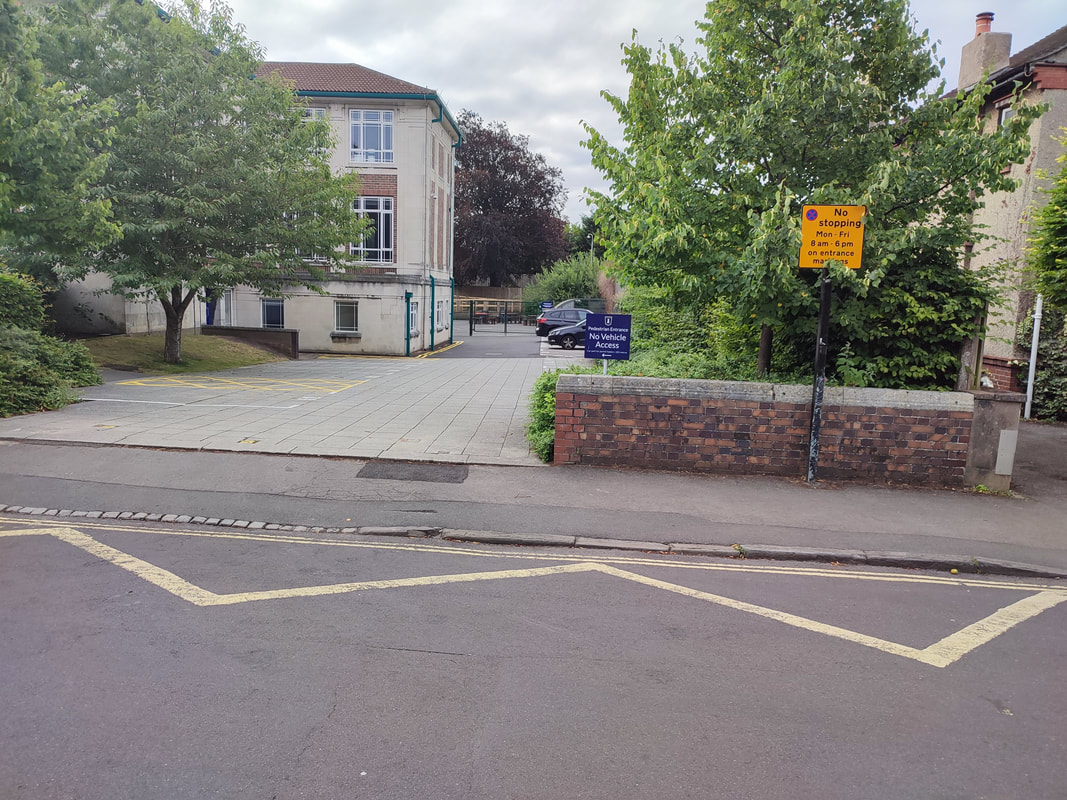
If you are just being dropped off the easiest thing is to enter via the main gate just off New Road, making sure that the gate that you enter by is actually to the school and not South Gloucester college next door. (See below left) Drive to the end of the road and turn right and you'll come to the main entrance to the school itself. The art room will be signposted from there.
Picture
Picture
.If you want to park there will be space in the staff car park. How do you find it? Do not go through the main gate but turn right instead. The entrance to the staff carpark is pictured below 
Go a little further and you will see the pedestrian entrance and connecting walkway to the school 
Picture
Carry on past the staff car park and you'll come to the main pedestrian entrance to the school. It leads to a pathway that eventually takes you to the main entrance of the school itself. This pathway also connects to the school carpark.
Picture
0 Comments

The Ultimate Guide to Watercolor Paper: Finding Your Perfect Match

8/4/2025

0 Comments

 
Buying art materials can both a pleasure and a pain but if you're thinking of coming along to one of our classes you can relax because the good news is, all of the materials are provided!
But at some point you may want to look into this further, or you may have a relative who wants to buy you some of this stuff for Christmas or Birthday (Lucky, lucky you!) which is why we've put together this little guide to help you to understand what paper works best with watercolour.
The best paper is always going to be the one that you can afford. While you are just practising your washes and unless you are serious about becoming a starving artist you'll probably be using some pretty cheap paper but if you do have a bit of extra dosh to spend what should you go for?  Let's be honest – standing in the art supply store staring at rows of watercolor paper can feel overwhelming. Hot pressed, cold pressed, rough, 140lb, 300lb... it's like they're speaking a secret language! But here's the thing: choosing the right paper can absolutely transform your watercolor experience. So grab a cup of tea, and let's demystify this whole watercolor paper situation together.

Why Paper Matters More Than You Think.
Before we dive into the nitty-gritty, let's talk about why your choice of paper is such a big deal. Watercolor is all about the dance between water and pigment, and your paper is basically the dance floor. The wrong paper can leave you frustrated with muddy colors, unwanted bleeding, or paint that just sits on the surface looking sad. The right paper? It's like magic – your colors sing, your techniques work the way they're supposed to, and suddenly you feel like you actually know what you're doing.

The Three Musketeers of Watercolor Paper Texture
Hot Pressed Paper: The Smooth Operator
Hot pressed paper is the smooth talker of the watercolor world. It's been pressed with heated rollers, which gives it that silky, almost glass-like surface. This is your go-to for botanical illustrations, detailed work, or when you want crisp, clean edges.
Perfect for:
  • Detailed illustrations and fine line work
  • Botanical art and scientific drawings
  • Mixed media projects
  • When you want maximum control over your paint
Watch out for: Hot pressed can be a bit unforgiving. Since the paint sits on top rather than soaking in, you've got less time to play around before it dries. It's also trickier to get those lovely organic watercolor bleeds and blends.
Cold Pressed Paper: The Goldilocks Choice
Cold pressed (sometimes called "NOT" paper – as in "not hot pressed") is the middle child that somehow became everyone's favorite. It has a moderate texture that's not too smooth, not too rough, but just right. Most watercolor artists swear by cold pressed because it's so versatile.
Perfect for:
  • Pretty much everything! Landscapes, portraits, loose paintings, detailed work
  • Learning watercolor techniques
  • When you want some texture but still need control
  • General watercolor painting
The sweet spot: Cold pressed gives you enough texture for interesting paint effects while still allowing for detail work. It's like the Swiss Army knife of watercolor paper.
Rough Paper: The Textured Rebel
Rough paper is exactly what it sounds like – it's got serious texture and personality. The bumpy surface creates beautiful granulation effects and gives your paintings that lovely organic, handmade feel.
Perfect for:
  • Landscapes and seascapes
  • Loose, expressive painting styles
  • When you want dramatic texture and granulation
  • Creating mood and atmosphere
Heads up: Rough paper can be challenging for beginners. All those bumps and valleys can make it hard to get smooth washes, and detail work becomes quite tricky. But once you get the hang of it, the effects are absolutely stunning.
Weight Matters: Understanding Paper Thickness
Paper weight is measured in pounds (lb) or grams per square meter (gsm), and it tells you how thick and sturdy your paper is. Think of it like choosing between a paper napkin and a paper towel – you want something that can handle getting wet without falling apart.
140lb (300gsm): The Lightweight Champion
This is the most common weight for watercolor paper, and it's perfect for most projects. It's substantial enough to handle watercolor techniques but won't break the bank.
Best for: Most watercolor projects, especially if you're just starting out or working on studies and practice pieces.
Pro tip: 140lb paper will buckle when wet unless you stretch it first (more on that in a future post!), but many artists actually like this slight texture it creates.
200lb (425gsm): The Sturdy Middle Ground
Thicker and more stable than 140lb, this weight reduces buckling and can handle more water and abuse. It's like the difference between regular paper and cardstock.
Best for: Serious paintings, wet-on-wet techniques, or when you want to avoid the hassle of stretching paper.
300lb (640gsm): The Heavy Hitter
This is the Cadillac of watercolor papers – thick, luxurious, and practically bulletproof. It barely budges when wet and feels amazing to paint on.
Best for: Important paintings, gallery work, or when you want to feel absolutely fancy while painting.
Reality check: It's expensive, so maybe save this for special occasions or when you're feeling particularly confident about your painting!

A Few Final Thoughts
The truth is, the "best" watercolor paper is the one that works for your style, your budget, and your goals. I always tell my students to buy a few different types and experiment. Maybe grab a hot pressed sheet for some detailed work, a cold pressed sheet for general painting, and a rough sheet to play with texture.
And here's a secret: even professional artists have preferences that might surprise you. Some love the challenge of rough paper, others swear by hot pressed for everything, and many of us have a stack of different papers because different projects call for different tools.
The most important thing? Don't let paper paralysis stop you from painting.  As you develop your style and preferences, you'll naturally gravitate toward what works best for you.


What's your go-to watercolor paper? I'd love to hear about your favorites in the comments below!
0 Comments

New Art Class Starting at Cotham School

7/26/2022

0 Comments

 
This is pretty exciting really. Not only will we be able to use one of the lovely art rooms in the school but if you're a car driver  you will be able to, whisper it, use the school carpark. For a venue in the centre of Bristol this is quite something. (Disclaimer, there will be other activities in the school on the evening so you won't always be guaranteed one but it's still pretty good to have the option.)
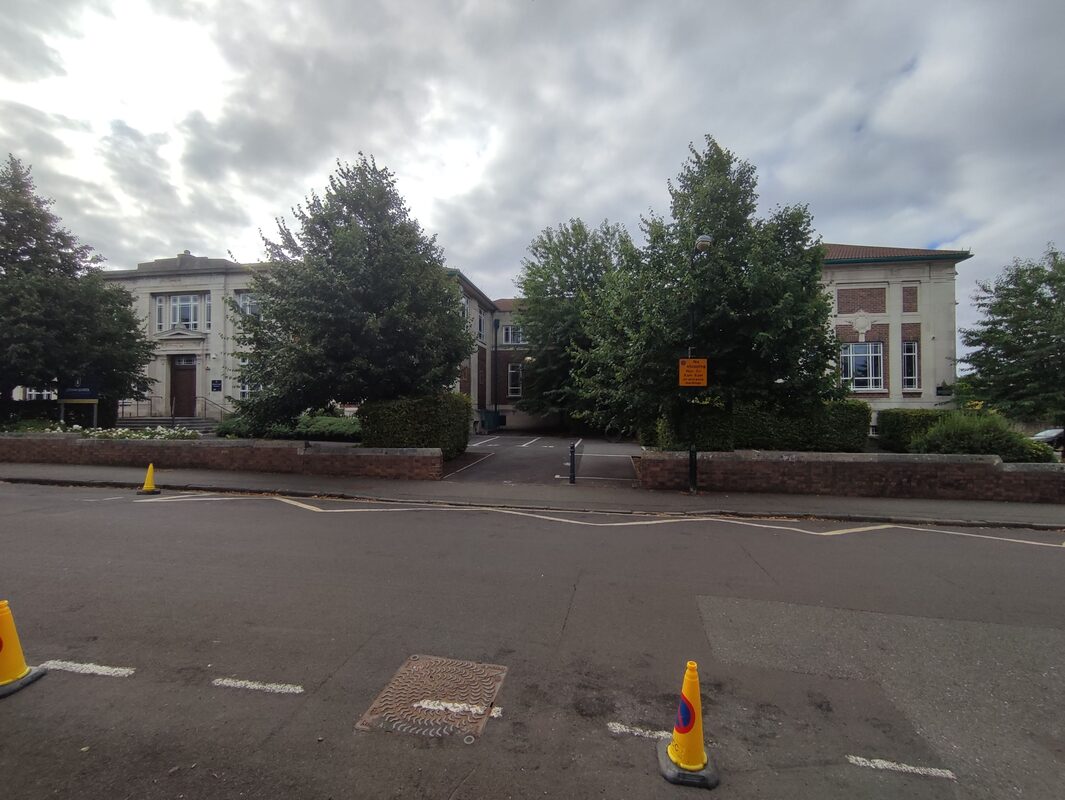
But which entrance do you need to go through to find the art room? Because a picture is, of course worth a thousand words take a look at the pictures below.  The first one shows the main student entrance to the school on Cotham Lawn Road  The second one shows the entrance to the to the right of the main student entrance. This connects to a small car park  at the end of which is a security gate. On the evening someone will be manning this gate from about 6.40 onwards and the art room is just a short walk on the other side of the playground.
Picture
Picture
0 Comments

All Materials Are Included

3/8/2022

 
Picture
.
So you've decided that you'd like to learn how to paint and draw?  Well done you! Approach it in the right way it will bring you many joys.   On this and further blog posts I'm going to be providing advice on art materials for all budgets to help point you in the right direction but bear in mind  that if you come along to one of our own classes you don't have to buy anything yet as all materials are included in the cost of the course
Providing all materials for these classes to students at no extra cost may not seem a lot but if you attend a Paint and Draw class (click for more details) you could easily be saving an extra £20-£30 and maybe more
If you visit www.greatart.co.uk you'll find a starter set of ILoveArtAcrylic for £10.49 I'm a big fan of this acrylic, most of the colours have at least a good lightfastness rating and each tube packs a generous 120ml of paint. If you wanted a reasonably starter set of acrylic I look no further although it's possible that some class material lists might ask you to buy some extra tubes . Factor in the cost of an A4 sketchbook, if you do a search on www.amazon.com for watercolour books you'll find a lot of reasonably priced Chinese ones for around £8. (They seem pretty chunky, 300gms is a good weight of paper to go for. I haven't tried any of these so can't vouch for their quality but on previous experience they ought to be ok.) Brushes could be bought again from Amazon. A quick search for acrylic brushes brings up these. 
​As with the sketchbooks I can't vouch for the quality of these. (Some of them have fabulous names though, Estenpumpful being my out and out favourite) but anything with orange nylon, sometimes called taklon can stand up to a lot of punishment and will be certainly be a big improvement on the hogshair brushes that I used to use when I was a student. It's difficult to judge how big some of them are but looking at the photographs of these the price seems good and they certainly have nice long handles.
Add these items together and you have £25.39 and notice I have yet to factor in the cost of kitchen roll, palette, pencils, rubbers and sharpeners. If you include that you are pretty close to the £30 mark.
It's easy to spend more. In later blog posts I will talk about some of the really lovely materials that are out there but this, for the time being is the sort of price that you would need if you were just starting out.
You could go a little cheaper with the paints if you wanted to. These acrylics from The Works are very cheap indeed and are well reviewed although I can't help thinking that they must be making some economies somewhere, pigment quality perhaps?  I'd probably go for the larger sized tubes which while still being pretty cheap will give you plenty of spare paint to experiment with. A small amount is fine if you know what you're doing but when you're learning you will soon get through a  37 ml tube.
I haven't mentioned the countless brands of artists paints out there in the art departments of those countless warehouse stores in retail parks across the country. (You know, the kind where you can buy everything from furniture to plastic storage tubs to bin bags). I was able to buy a set of watercolours at one once for a single pound but they were very hard to apply as a wash and pretty useless for that reason.
If you have a Range near you I'd pop in as there art department has a pretty good range of well know brands from Winsor and Newton and Daler Rowney as well as the cheaper ones.
What happens though if you source all of these materials and then having bough them  decide that acrylic is not for you and you'd actually prefer, watercolour, or oil? Again, that's the advantage of these classes.  Try before you buy.
Have you found a particular brand of paint or brush that you love working with and that I haven't mentioned? I'm always interested in finding out more myself so please feel free to leave a comment at the end of this post.

CLASSES GOING AHEAD

1/3/2022

0 Comments

 
Until the government advice changes and as per other adult education providers in the Bristol area I still plan to run the new batch of classes starting on January 10th 2022.
Current mask wearing rules will apply however and each student will have a table to themselves. Windows will be open and art materials will be on the table as you come in. If you have any queries related to this please email me on [email protected] 
0 Comments

Thanks for coming

10/16/2007

11 Comments


Thanks for visiting this website.   As well as giving an overview of a different technique each week I usually give a short presentation  that will introduce to you an art historical term or two, the work of an artist or the history behind a particular material.  Nothing too long, but it's a good way of giving people a break and people generally find it quite helpful.    For more check out my other website www.lifedrawingclasses.co.uk  I also have another wordpress blog www.beginnersartclasses.wordpress.com  which  contains information related to my past experiences as a tutor and some of the artists I've found and hope you will find inspirational   I'll also be posting some stuff here so keep popping back every couple of weeks and I'll try and get some new stuff for you to look at.

11 Comments
    You've found the  blog for the Paint and Draw Bristol and Bath art classes for adult beginners that are run by Will Stevens. We'll be running classes near you again soon and you can find out more if you click here.  Meanwhile read on for advice about art materials drawing techniques and the great works of art out there there that you can enjoy

    Will Stevens

    Will Stevens has taught beginners classes in Bristol for 25 years now He has also taught privately on a one to one basis, at residential homes , the University of Bristol Arts Society the Sky Arts Den at the Bath Literary festival. (You can see some pictures on the gallery page)  He's given drawing tips to Laura Rawlings on her afternoon radio Bristol show and most recently given a talk on Ipad painting to the Clifton Arts Club in Bristol. For some comments about Will and his friendly,  teaching style have a look at the testimonials page.

    Archives

    August 2025
    July 2022
    March 2022
    January 2022
    October 2007

    Categories

    All

    RSS Feed

Testimonials

"Having never been taught art before I have really enjoyed the classes, learning about some of the mysteries of drawing and painting in such a relaxed and informal atmosphere. My friends have been  impressed with what I have produced". To read more testimonials click here

The Gallery

Picture
Would you like to see images of some of the many people that have enjoyed this class over the years? Click here


For more information on Booking, click here

Bristol and Bath Art Classes
  • ABOUT
  • GALLERY
  • TESTIMONIALS
  • BLOG
  • Available Courses
  • HIRE AN ART TEACHER
  • ABOUT
  • GALLERY
  • TESTIMONIALS
  • BLOG
  • Available Courses
  • HIRE AN ART TEACHER